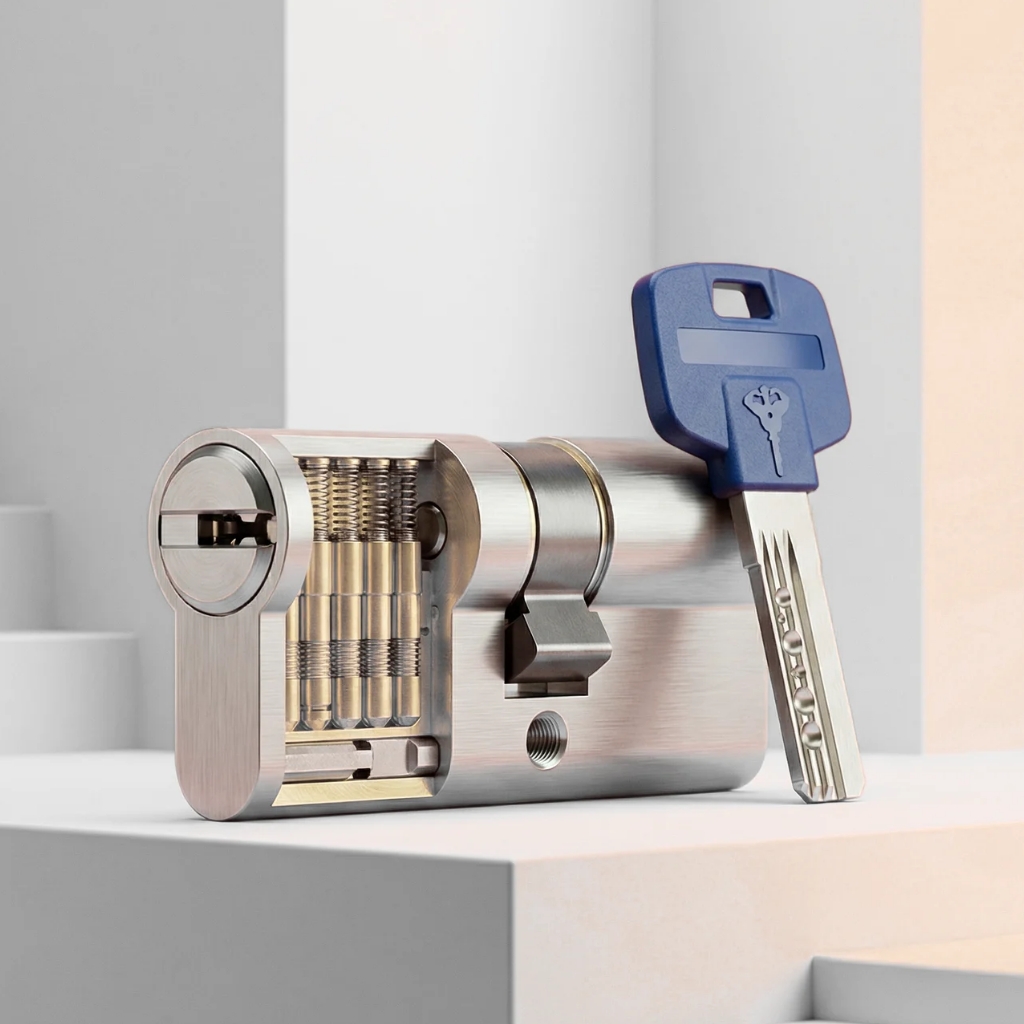
Both jobs finish in the same place, with the key in someone else's pocket no longer opening your door. What differs is what is still hanging there afterwards. A rekey leaves the lock where it is, bolt and trim and all, and alters only the pin heights inside the plug. Changing the lock means the whole set comes off and new hardware goes on. Most North Shore homes only ever need the first, which makes the useful question something other than which of the two you are booking: who held a key, in what capacity, and how many of those people are still on the list.
Rekeying after a change of hands on the North Shore
Possession day in one of the waterfront towers above Lonsdale Quay is the tidiest version of this. Those towers are 2000s and 2010s stock, and the developer hung a B-series deadbolt from Schlage or Kwikset on every suite, so the cylinder is sound and the work is a straight re-pin. What nobody can produce on possession day is a list of everyone who was issued a key between completion and handover, which is the whole reason to do it.
Walk two or three blocks back from Esplanade Avenue and the picture inverts. Between Lonsdale and St. Georges, the 1st and 2nd Avenue blocks are concrete stock from the 1980s and early 90s, and their suite cylinders have carried one tenancy after another ever since. Central Lonsdale carries the same pattern out to the cross streets at East 15th, East 17th and East 19th, where the stock is single-family houses and smaller infill duplexes, and a worn Weiser or Kwikset cylinder is the usual find. Rekeying on a tenant change is the single most frequent job we do in that belt, and it is also where we most often have to tell an owner the cylinder has had enough.
Two more kinds of handover repeat often enough to be worth naming. Up in Lynn Valley, the houses and condos within walking distance of the Lynn Canyon Suspension Bridge take short-term guests right through the season, and a rekey between bookings there is routine upkeep rather than an emergency. And across the Dollarton side of Seymour, Pemberton Heights and the Lonsdale cross streets there are secondary and basement suites whose entry is a separate tenancy from the house it is attached to. That door gets its own key, pinned independently of the main entry, and it is quoted as its own cylinder because that is what it is.
What a lock change or rekey includes
- A look at the existing cylinder and keyway before any figure is fixed
- Re-pinning on deadbolts, knob sets and lever handles alike, with the previous key dead before anyone leaves
- Replacement hardware supplied and fitted where a cylinder can no longer be pinned reliably
- One property handled door by door: a sound cylinder re-pinned, a finished one beside it replaced
- Front, back, garage side and suite entries put onto one key when their keyways allow it
- Every cylinder on a door counted separately, including a passage latch sitting above a deadbolt
- Keys cut at the address and tested in every door they are meant to open
- Suite cylinders re-pinned inside an existing building master, leaving the manager's key working exactly as it did
- Old hardware taken away, or left with you, whichever you would rather
- A written note of the work and the key count, which is what a strata or an insurer asks for
Lock change and rekey prices in North Vancouver
The address is not what moves these numbers. Hardware grade, cylinder count and whether the keyways agree are, and all three get settled on the phone. There is no dispatch charge for a hillside address, an Edgemont one or a Horseshoe Bay one, and the range you hear on the call is what gets confirmed at the door.
| Job type | Typical range |
|---|
| Rekey of a single deadbolt | $45 – $85 |
| Each additional lock rekeyed on the same visit | $25 – $45 |
| Lock change, mid-grade hardware supplied and fitted | $120 – $220 |
| Lock change, high-security hardware supplied and fitted | $200 – $380 |
| Keyed-alike set across 2 to 4 doors | $120 – $280 |
| After-hours or weekend call | Add $40 – $80 |
Row two is the reason to do every door on one visit. The first cylinder carries the trip out; the ones after it do not. The last row follows the hour rather than the neighbourhood, and you are told about it on the call rather than at the end of the job.
Booking a lock change or rekey in North Vancouver
01
Cylinders, keyway, reason
Call and say how many cylinders there are, what name is stamped on the face of your current key, and why the keys are changing. Schlage, Kwikset and Weiser cover most North Shore doors and ride on the van as standard. A restricted blank, a Medeco, or a suite sitting on a building master each change what the technician loads before setting off.
02
Getting to the door
For a house this is a street address. For a suite it is two doors, and the building entrance is the first one, so have whatever gets a technician into the lobby sorted before they arrive. Worth flagging if you are in the Quay or Esplanade blocks on a weekend: parking is tight there, and in some blocks the visitor buzzer is what produces a parking tag at all. Same-day calls are given a window on the phone rather than one figure for the whole territory: 18–25 minutes across the Lonsdale blocks and Lynnmour, and longer than that out to Deep Cove, Caulfeild and Horseshoe Bay.
03
Pinned, cut and proved
Keys are cut at the address and the cylinders pinned to them. Before the technician packs up you work each new key yourself, in each door it is supposed to open. The old key gets tried as well, so you watch it do nothing rather than take our word for it.
When a lock change beats a rekey in North Vancouver
Cylinders do not survive unlimited re-pinning, and the North Shore has two pockets where that limit gets reached as a matter of course. The 1st and 2nd Avenue blocks behind Esplanade have been re-pinned for successive tenancies since the buildings went up, and plenty of those cylinders are now at the end of it. Lynnmour repeats it in a different building type: Fir Street and Cedar Street are mostly attached two-storey units from the 1980s and early 90s, each with its own front door onto a shared entry, and most started life on Weiser or older Schlage that has served a long queue of tenants since. A cylinder that has been through ten or twelve of those does not fail dramatically. It goes vague: the key drops in with no resistance, the plug has a wobble in it, and the turn is gummy one morning and fine the next. Another re-pin at that point is money spent on a lock that might answer to something other than your key, and it gets flagged before the work is priced rather than after.
Age by itself is not a verdict, though. The 1970s Weiser, Kwikset and Schlage hardware across the Berkley streets in Seymour is genuinely serviceable, and replacement cylinders for most of those keyways travel with the technician. The postwar belt at the north end of Norgate, along Norgate Avenue, Mackay Road and Queensbury Avenue, is the opposite case: much of that stock is still on its original 1950s and early 60s locks, and those are frequently worn past reliable re-pinning. In the older Caulfeild houses there is a harder stop again, because a fifty-year-old lock can use a keyway that no longer comes in fresh blanks. There is nothing to cut a key from. That door takes new hardware or it stays as it is.
The other reason to replace has nothing to do with wear. Plenty of detached houses above 21st Street in Upper Lonsdale, and on Glenmore Drive and Prospect Avenue up on the Edgemont plateau, still carry dated single-cylinder deadbolts that offer very little pick resistance. Re-pinning one of those hands you key control over a lock that was never much of a lock, and a grade 1 deadbolt in the same prep is the honest recommendation instead. The same conversation comes up on the Capilano side, where a good share of the mid-century ranchers on Glenview Avenue and Woodgreen Drive is still on mortise-style deadbolts or original knobsets that are past their service life.
And some doors should not be rekeyed at all, because there is nothing on them worth rekeying. Around Quinn Street in Lynnmour there are single-family houses still running a knob and latch with no deadbolt above it, and a handful of character homes in Pemberton Heights where a knob lock is all the door has ever carried. Fresh pins in those change who holds a key without changing how easily the door opens to someone who does not. Fitting a deadbolt is the actual job.
Rekeying in West Vancouver, from Ambleside to Caulfeild
West Vancouver sits inside the same coverage area as a separate municipality, and its residential hardware refuses to average out. The character houses on Mathers Avenue, Fulton Avenue and Esquimalt Avenue are often still on their original single-cylinder deadbolts and knob-lock combinations. Whether a cylinder of that age still takes fresh pins gets read at the door rather than assumed from the year the house went up. Further west, the strata townhome complexes near Eagle Harbour Road in Caulfeild were built through the 1980s and 90s on a single strata-managed keying system, so one unit's cylinder is never quite an isolated thing. Re-pinning it is simple enough, but your key profile has to stay inside the building's system, which makes it a conversation with the manager before it is a job for us.
After a lost key or a break-in attempt
A missing key is an open question about a door, and the answer is cheap next to the question. Re-pinning both sides of a house on the day a key goes missing costs less than a single call-out after something has happened. Where a lock was actually attacked, the cylinder is often damaged in ways that do not show from the street, and fresh pins in a housing that has been twisted are not a repair, so that one gets replaced. If the frame took the force instead of the lock, the work is on the door rather than in it and lives on our door repair page. For a property with several entries and different people needing different access, a hierarchy beats a shared key, and that is set out on the master key systems page.
I have just taken possession of a suite in a Lower Lonsdale tower. Rekey or lock change?
Almost always a rekey. A waterfront tower from the last twenty years or so is carrying a developer-fitted B-series deadbolt, Schlage or Kwikset, and a cylinder of that age and grade takes fresh pins without complaint. What you are buying is key control rather than hardware, because nobody can now produce a list of everyone issued a key between completion and your handover. One thing to be clear about: we work on your own suite door. The fob that opens the lobby, the parkade and the amenity rooms is building property, so issuing or cancelling one goes through the strata council or the property manager.
Can my front, back and garage doors all take the same key?
Yes, when the keyways agree, and that is the first thing checked at the door. Bringing extra cylinders onto one key on the same visit is what the second row of the price table covers. Two things catch people out here. A door with a passage latch above the deadbolt carries two cylinders, not one, so it counts twice, which is common on the older townhome entries in Lynnmour. And a basement or garden suite door is usually better kept off the house key altogether, since the point of it is that the tenant's key opens one door and not the other.
The locks have been on the house since the 1950s. Will they take new pins?
Sometimes. The 1970s Weiser, Kwikset and Schlage hardware we meet across the Berkley streets in Seymour is generally serviceable, and replacement cylinders for most of those keyways travel with the technician. Older than that and it depends on how hard the lock has lived: a lot of the original 1950s and early 60s hardware at the north end of Norgate is worn past reliable re-pinning. In the older Caulfeild houses there is a further problem, because a fifty-year-old lock can use a keyway that no longer comes in fresh blanks, and then there is nothing to cut a key from.
My key is a restricted blank. Can it still be rekeyed?
Yes. A restricted keyway exists to stop copies being cut at a hardware-store kiosk, not to stop a locksmith working on the lock. Medeco is the one we see most on the North Shore, and the vans carry blanks and cutting equipment for it. There is one practical catch: a Medeco rekey wants the existing key in hand. Where that key is the one that has gone missing, the plug gets picked open before it can be re-pinned, and the visit runs longer for it. And where the building owns the restricted system rather than you, the new key profile has to stay inside it.
Will rekeying my suite break the building's master key?
Not when it is done properly. A suite cylinder can be re-pinned inside an existing hierarchy so the manager's or the council's key still opens the door afterwards. It comes up most often in the Ambleside condo blocks off 13th Street, and in Capilano on the Rabbit Lane townhomes. What we will not do is quietly take a door out of a master system, or bypass one, without authorization from the building's manager. If you are the one commissioning a system rather than living under someone else's, start on the master key systems page instead.
I rent out a basement suite. Do I have to rekey it after every tenant?
Only while it stays on a key. The suite entry is pinned independently of the main house, so a tenant change means one cylinder rather than the whole property, which keeps it in the second row of the table. The alternative that comes up constantly on the Dollarton side is a battery keypad deadbolt on the suite door: you issue a code, you retire the code, and the rekey between tenancies stops existing. It replaces the cylinder and leaves the door and frame untouched. In a strata, what is permitted differs from one building to the next, and reading your bylaws is not our job, but we will hand over the product dimensions and an installation photo if the council wants the request in writing.