When the police have finished and the report is filed, a locksmith is usually the next call — and the most urgent one. A damaged door or a compromised lock means you can't sleep in your own home safely until it's resolved. Here's the sequence a technician works through on a North Shore break-in call, and why each step matters.
First: assess every entry point, not just the obvious one
Most break-ins enter through the front door. But after someone has forced their way in, there's often secondary damage that's easy to miss in the shock of the moment. A thorough post-break-in assessment covers every door and accessible window in the property — not just the one that was kicked in.
North Vancouver's housing stock is diverse. In older character homes in the Lower Lonsdale and Central Lonsdale flatlands, you'll often find multiple exterior doors (front, back, side access to the lane) and older single-cylinder deadbolts that were never high-security to begin with. In Lynn Valley and Deep Cove, strata townhomes and detached houses frequently have patio doors or basement walk-outs that get overlooked during an initial police walkthrough. In the newer condos along Lonsdale Avenue, a break-in is less common but compromised key fobs or deadbolts on corridor-entry units still need a full sweep.
The locksmith checks:
- The primary entry point — door, frame, strike plate, hinges, and the lock cylinder itself.
- All secondary exterior doors for signs of attempted entry or existing weaknesses a burglar may have noted for a return visit.
- Ground-floor and accessible windows, particularly those with latches rather than keyed locks.
- Any shared-building access hardware if you're in a strata — a compromised fob or master key is a bigger problem than a single damaged lock.
Second: the door frame — usually the real damage
The lock itself is rarely what breaks in a residential forced entry. The weak point is almost always the door frame and strike plate. A standard strike plate is held in with short screws that go only partway into the stud — one solid kick is enough to split the jamb and pop the door regardless of how good the lock is.
After a break-in, the frame is what needs the most attention. A locksmith performing post-break-in door repair will:
- Inspect the jamb for splits, cracks, and separation from the rough framing behind it.
- Replace a standard strike plate with a heavy-gauge reinforced plate anchored with 3-inch screws that reach the structural stud — this is what actually prevents the next kick from working.
- Repair or shim a cracked jamb if the wood is salvageable. If it's not, we'll tell you clearly and advise on a carpenter referral for the frame rebuild before we fit new hardware.
- Check hinge screws — another common weak point on older hollow-core or solid-wood doors where the hinge leaf pulls away under impact.
A door that closes and latches isn't the same as a door that's secure. If the frame is cracked and we only replace the lock, the property isn't secure. We won't do half a job.
Third: the lock — replace or rekey, and which cylinder grade
Once the frame is addressed, the lock comes next. The decision between a rekey and a full lock replacement depends on what the burglar did:
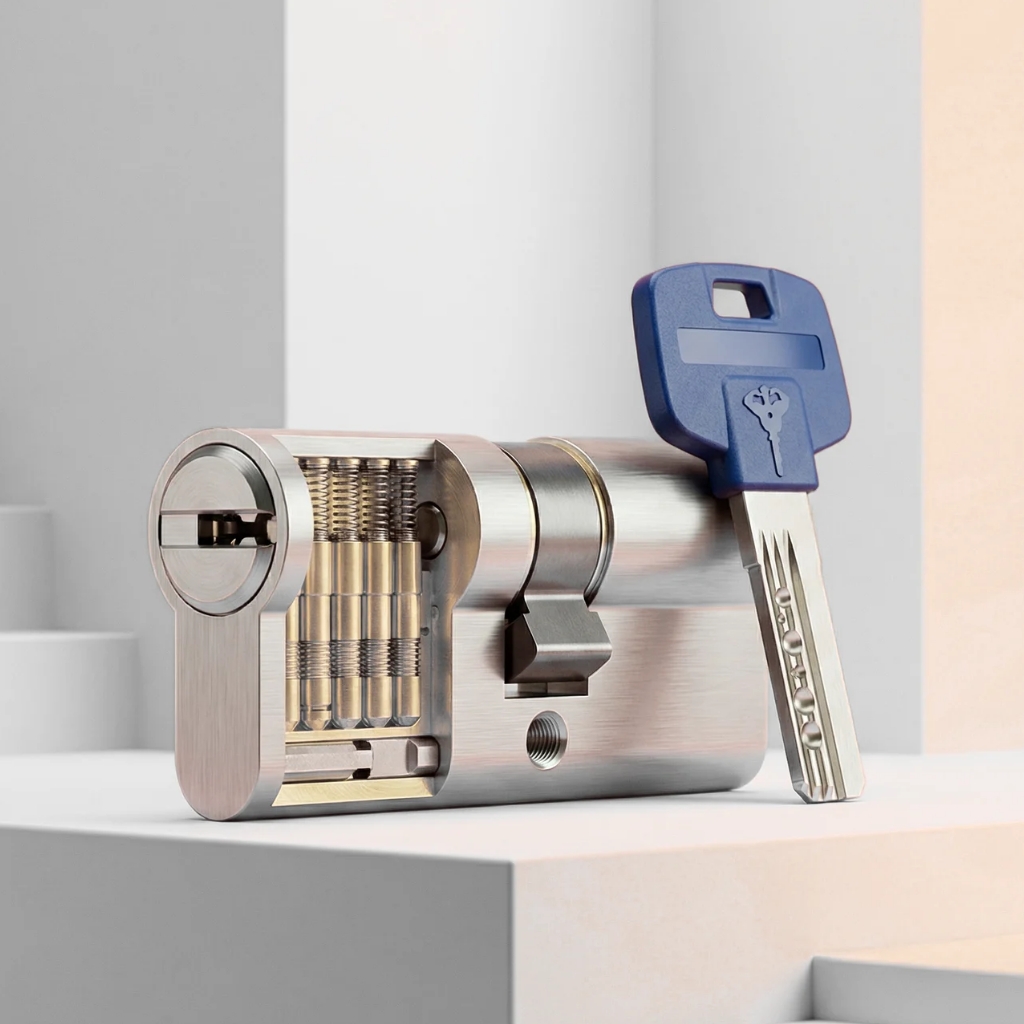
- If the lock was picked or the door was simply kicked in with the lock intact, a rekey is appropriate — the cylinder is changed so any stolen or copied key no longer works, without the expense of new hardware.
- If the lock cylinder was drilled, snapped, or physically destroyed, it needs to be replaced. We carry common residential grades in the truck and can fit a new deadbolt on the same visit.
- If you've been meaning to upgrade from a basic Grade 3 deadbolt to something more resistant, a break-in is a good moment to do it. Grade 1 cylinders (ANSI/BHMA) are significantly harder to pick and bump, and we stock them for North Shore residential installs.
After a break-in where keys may have been taken, a rekey of every exterior lock is strongly recommended — not just the door that was forced. If your keys were on a hook inside and are now gone, whoever has them has a map of your entry points.
Fourth: consider what comes next
The immediate repair gets you back to baseline. But most customers we see after a North Shore break-in also want to understand what would make a repeat entry harder. A few practical upgrades that come up frequently on these calls:
- Door reinforcement kits — steel door armour that wraps the hinge side, latch, and deadbolt simultaneously. Significant upgrade for older wood-frame homes in Lynn Valley, Edgemont Village, and Norgate.
- Smart locks with audit logs — a smart lock installation means you can see exactly who entered and when, and you can revoke codes remotely. Particularly useful in strata units or shared households.
- Secondary deadbolts — adding a second deadbolt above the primary on a vulnerable door, especially on rear entries that are screened from the street.
- Window locks — ground-floor sash windows in older North Van homes often have simple latches. Adding keyed window locks or secondary pins is a low-cost improvement.
None of this is mandatory. The job we're called to do first is secure your home tonight. The additional hardening conversation happens after, if you want it — and there's no pressure to do it all at once.
What to do while you wait for the locksmith
If you've just discovered a break-in and called the police, here's what to do while you wait for both:
- Don't touch or move anything in the affected area — preserve the scene for the police.
- Don't re-enter the property alone until you've confirmed no one is still inside — let police clear it first.
- Take photos of the damage before anything is touched or repaired. Your insurance claim will need documentation.
- Call your insurance company as soon as you've called the locksmith. Most home policies in BC cover the cost of emergency lock replacement after a break-in, though deductibles vary. Ask for a receipt — we always provide one.
- If a door can't be secured at all (frame too damaged to hold a lock), we can fit a temporary hasp and padlock to get you through the night while a more permanent repair is arranged.
A break-in is a difficult experience, but the security part of it has a clear fix. Our technicians respond to post-break-in calls across North Vancouver, West Vancouver, and the wider North Shore — including after-hours and weekends, when these calls most often come in. One phone call and we'll give you a straight price and an arrival time.